Germany

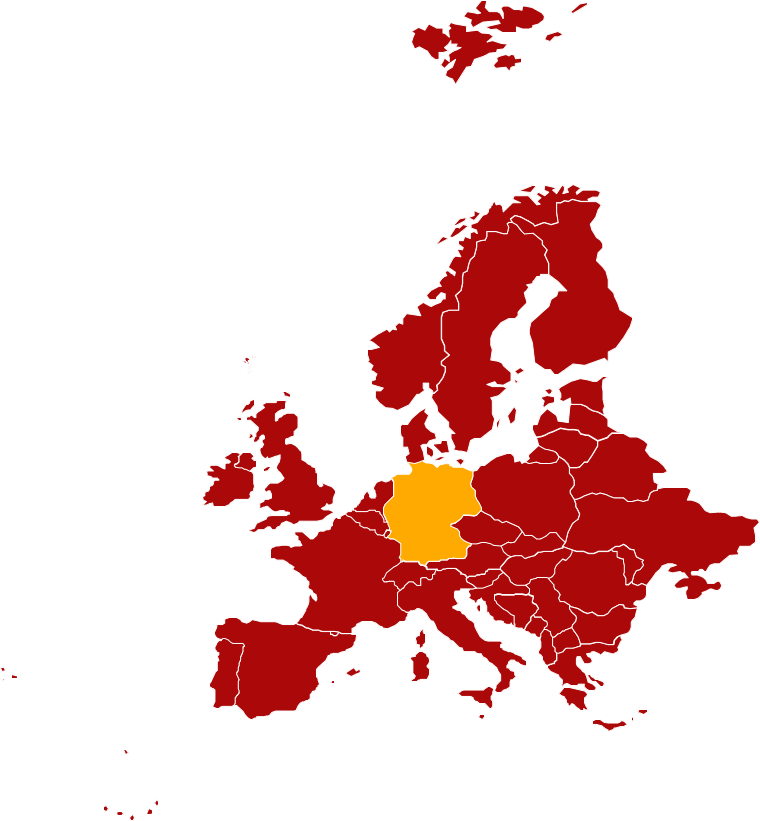
Germany is a country in Central Europe. It is a federal republic consisting of 16 federal states, each of which has its own culture, history, and traditions. The country is known for its impressive architecture, art, and music, which have been shaped by many famous German artists such as Johann Sebastian Bach, Ludwig van Beethoven, and Caspar David Friedrich.

Germany’s landscapes are diverse and impressive. From the majestic Alps in the south to the vast coastlines in the north, Germany offers breathtaking scenery that is ideal for outdoor activities such as hiking, skiing, and swimming.

Germany is also known for its innovative economy, which is among the largest and strongest in the world. German companies such as Volkswagen, BMW, Siemens, and Adidas are known and respected worldwide.

German culture is rich in traditions, ranging from Oktoberfest and Christmas markets to Carnival and regional festivals. German cuisine is diverse and offers a wide selection of hearty dishes such as sausages, sauerkraut, and beer, as well as delicious sweets like gingerbread, Black Forest cake, and pretzels.

Overall, Germany is a fascinating country with a rich history, breathtaking scenery, and a dynamic economy and culture.
Highlights in Germany

Germany has many highlights, but here are some of the best-known and most-visited:

  1. Berlin: Germany’s capital is a vibrant city with a rich history and culture. Visitors can see the remains of the Berlin Wall, visit the Brandenburg Gate, or take a tour of the famous Museum Island.

  2. The Bavarian Alps: The Alps in southern Germany offer breathtaking landscapes that are perfect for hiking, skiing, and climbing. The famous Zugspitze, Germany’s highest mountain, is located here.

  3. The historic city of Heidelberg: Heidelberg is one of Germany’s oldest cities and boasts a beautiful old town with one of Europe’s oldest universities. The city is also known for its breathtaking castle ruins, which tower majestically over the city.

  4. Neuschwanstein Castle: This famous castle in Bavaria was built by King Ludwig II and served as the inspiration for the castle in the Disney film “Sleeping Beauty.” It is a popular tourist destination and an absolute must-see for anyone visiting Bavaria.

  5. The Rhine Region: The Rhine Region is known for its vineyards, picturesque villages, and impressive castles. The city of Koblenz, where the Rhine and Moselle rivers converge, is a well-known tourist destination.

  6. Oktoberfest: The famous Bavarian folk festival in Munich attracts millions of visitors from all over the world every year. Here, you can enjoy traditional Bavarian food and drinks while celebrating in the festival tents and singing traditional songs.

  7. Black Forest: The Black Forest in southwestern Germany is known for its dense forests, idyllic lakes, and charming villages. Here, you can hike, bike, and enjoy Germany’s natural beauty.

  8. Hamburg: Hamburg is known for its port city culture, impressive architecture, and delicious cuisine. Immerse yourself in the vibrant hustle and bustle of the city center and discover diverse neighborhoods like St. Pauli, Altona, or the trendy Schanze. Learn more about the city’s history at one of its many museums, or let yourself be swept away by the vibrant music scene and nightlife.

  9. The North Sea—a fascinating body of water with a rich history and a unique landscape. Situated between Germany, Denmark, the Netherlands, Belgium, and the United Kingdom, the North Sea is an integral part of life in Europe. From endless beaches and picturesque coastal towns to bustling fishing ports and historic islands, the North Sea offers a wide variety of experiences for visitors of all ages and interests. Whether you want to explore nature or discover the local culture and cuisine—the North Sea is a destination you shouldn’t miss.

  10. The Baltic Sea—Stretching from Sweden and Finland to Germany, Poland, and Russia, the Baltic Sea covers a vast geographic region. With its pristine beaches, picturesque coastal towns, and historic landmarks, the Baltic Sea offers a wide variety of experiences for visitors of all ages and interests. Whether you want to enjoy the beauty of nature or discover the local culture and cuisine—the Baltic Sea is a destination you shouldn’t miss.

These are just a few of the many highlights Germany has to offer. There’s so much more to discover and experience!

 Location

Germany is located in Central Europe and covers an area of approximately 357,000 square kilometres. It borders nine countries: Denmark to the north, Poland and the Czech Republic to the east, Austria and Switzerland to the south, and France, Luxembourg, Belgium and the Netherlands to the west.

 History


The history of Germany is long and complex and reaches back into prehistoric times. The following is a brief overview of several important periods and events:

  • Roman period: From the 1st century BC onwards, the Roman Empire controlled parts of what is now western and southern Germany. Important Roman settlements included Cologne and Trier, and numerous archaeological remains can still be seen today.

  • Holy Roman Empire: During the Middle Ages, territories in present-day Germany formed a major part of the Holy Roman Empire, a complex political entity that existed for many centuries.

  • Reformation: In the 16th century, Martin Luther became one of the leading figures of the Protestant Reformation, which had a major influence on German and European history.

  • Bismarck era: In the 19th century, Prussia played the dominant role in the unification of Germany under Otto von Bismarck.

  • First World War: Germany was one of the major powers involved in the First World War from 1914 to 1918. The conflict ended in defeat and was followed by major political and economic upheaval.

  • Weimar Republic: After the war, Germany became a parliamentary democracy known as the Weimar Republic. It faced severe economic crises and political instability.

  • Second World War: Nazi Germany under Adolf Hitler initiated the Second World War in Europe in 1939. The war resulted in catastrophic destruction, the Holocaust and millions of deaths across Europe and beyond.

  • Division and reunification: After the Second World War, Germany was divided into the Federal Republic of Germany in the west and the German Democratic Republic in the east. Germany was reunified in 1990.

These events represent only a small part of Germanys complex history. Today, Germany is a federal parliamentary republic and an important European country.


 Getting around

  Public transport:

Price:
cheap       expensive
from approx. €1.70

Availability:
low       high
Train, bus, tram and underground

Safety:
low       high


  Taxi:

Price:
cheap       expensive
Average base fare approx. €3.50 and average price per kilometre approx. €2, depending on the region

Availability:
low       high

Safety:
low       high


  Rental car:

Price:
cheap       expensive
from approx. €40 per day, depending on region and vehicle category

Availability:
low       high

Safety:
low       high

 More information

  Official language: German

  Population: 83.2 million (2021)

  Currency: Euro (EUR)

  Capital: Berlin

  Largest airport: Frankfurt International Airport (FRA)

  Public holidays: New Year, Epiphany, Easter, Pentecost, Labour Day, German Unity Day, Christmas and additional regional public holidays

  Climate

 Temperate climate

 Best time to visit: May to September, although Germany is a year-round destination


Germany has a temperate climate that varies from west to east and from north to south because of its geographical location and topography. In general, the climate is relatively mild, although weather conditions can vary considerably from year to year.

Summers are generally mild to warm, with temperatures commonly ranging between 20 and 30 °C. In some regions, summer temperatures can rise above 30 °C. Winters are cold, often with temperatures between -1 and 5 °C, although colder periods below -10 °C are possible. Snowfall is common in some parts of Germany during winter, particularly at higher elevations.

There are significant regional differences. Northern and northwestern Germany have a stronger maritime influence, resulting in relatively mild winters and cooler summers. Southeastern regions have a more continental influence, with colder winters and warmer summers. Higher-altitude regions such as the Alps and the Black Forest are generally cooler and wetter.

Germany is also influenced by large-scale weather patterns over the North Atlantic and by maritime air masses from western Europe.


Berlin
 

 JanFebMarAprMayJunJulAugSepOctNovDec
Min. °C-3-21491214141172-1
Max. °C2481318222323191473
Rainy days10889101098881011
Sunshine hours per day234678776421